
Porn Addiction Treatment & Recovery: The Complete Guide For 2025 Recovery Steps
Let’s get real about porn addiction. No shame. No judgment. Just the truth you deserve to hear—and the solutions that actually work. Whether you’re struggling yourself or trying to help someone you love, this guide gives you evidence-based treatment options, recovery programs, and support resources that can make a real difference.
Here’s what nobody’s telling you: porn addiction is complex, deeply personal, and affects millions of people. But recovery is absolutely possible. This isn’t about moral failure—it’s about understanding how your brain works, recognizing the signs, and taking action with compassion and science on your side.
Key Takeaways
- Porn addiction is real and affects brain chemistry similar to other behavioral addictions
- Multiple treatment options exist including therapy, support groups, and online programs
- Recovery is possible with the right support and evidence-based approaches
- No shame required—this is a health issue, not a moral failing
- Professional help works—success rates improve significantly with proper treatment
Is Porn Addiction Real? Understanding the Science
The uncomfortable truth is this: yes, porn addiction is real—but it’s also controversial in the medical community. While the evolving landscape of adult content consumption has made pornography more accessible than ever, the debate about whether it constitutes a true “addiction” continues.
Here’s what we know from the science:
The Brain Science: Research shows that excessive porn use activates the same reward pathways in the brain as substance addictions. When you watch porn, your brain releases dopamine—the “feel-good” neurotransmitter. Over time, your brain can become desensitized, requiring more intense or frequent stimulation to achieve the same effect.
Official Recognition: The World Health Organization (WHO) recognized “Compulsive Sexual Behavior Disorder” in the ICD-11, which includes problematic pornography use. While the American Psychiatric Association hasn’t officially classified “porn addiction” in the DSM-5, they acknowledge that behavioral addictions exist and can cause significant distress.
The Real-World Impact: Regardless of terminology, millions of people report that pornography use has negatively affected their lives, relationships, work performance, and mental health. If it’s causing problems in your life, it’s a problem worth addressing—labels aside.
“The question isn’t whether porn addiction fits a perfect diagnostic criteria. The question is: Is this behavior causing harm in your life? If the answer is yes, then seeking help is the right move.”
— Clinical perspective on behavioral addictions
What Are the Signs of Porn Addiction?
Let’s talk about the signs nobody wants to admit. Recognizing porn addiction isn’t about judgment—it’s about honest self-assessment. Here are the key indicators that porn use has crossed from casual to problematic:
Behavioral Signs
- Loss of control: You’ve tried to stop or cut back multiple times but can’t
- Escalation: You need more extreme or frequent content to get the same effect
- Time consumption: Hours disappear while watching porn, affecting work or relationships
- Secrecy: You hide your porn use from partners, family, or friends
- Continued use despite consequences: You keep watching even when it’s causing problems
- Neglecting responsibilities: Work, family, or personal obligations suffer
- Using porn to cope: You turn to porn to deal with stress, anxiety, or negative emotions
Emotional & Mental Signs
- Guilt and shame: Persistent negative feelings after watching porn
- Anxiety: Worry about your porn use or fear of being discovered
- Depression: Low mood, loss of interest in other activities
- Irritability: Mood swings, especially when unable to access porn
- Obsessive thoughts: Constant preoccupation with porn or sexual content
Relationship & Sexual Signs
- Decreased intimacy: Less interest in sex with your partner
- Sexual dysfunction: Difficulty with arousal or performance with a real partner
- Unrealistic expectations: Comparing real sex to pornographic scenarios
- Emotional distance: Withdrawing from your partner emotionally
- Relationship conflict: Arguments about porn use or secrecy
⚠️ When to Seek Help Immediately
If you’re experiencing suicidal thoughts, severe depression, or your porn use involves illegal content, seek professional help immediately. Contact a mental health crisis line or therapist right away.
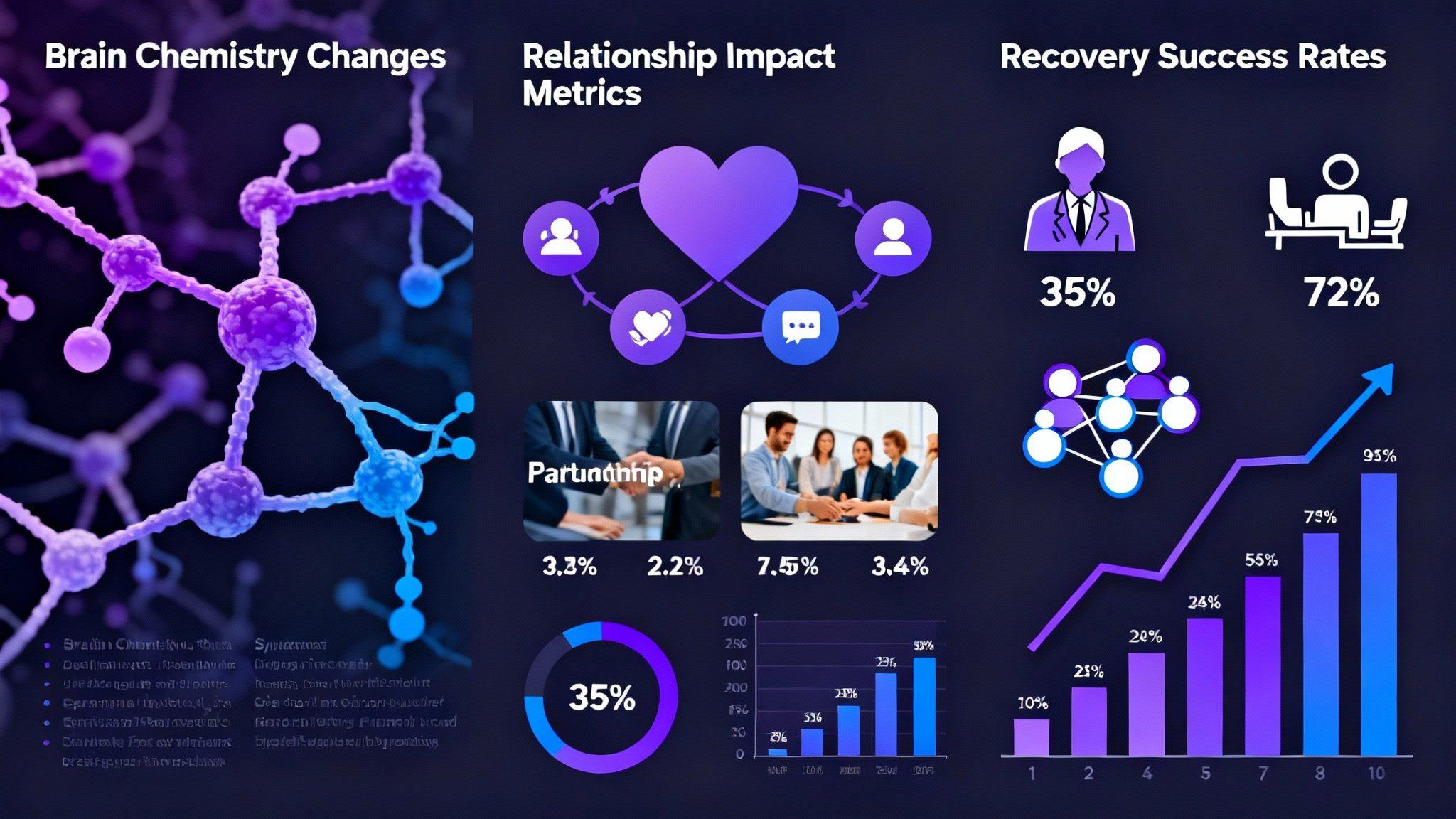
How Porn Addiction Affects Your Brain
Here’s the uncomfortable truth about what’s happening in your brain when porn use becomes compulsive. Understanding the neuroscience isn’t about scaring you—it’s about empowering you with knowledge.
The Dopamine Connection
Your brain’s reward system evolved to reinforce behaviors essential for survival—eating, social bonding, reproduction. Pornography hijacks this system by providing an unnaturally intense dopamine hit without the effort required for real-world sexual encounters.
What happens:
- Initial exposure: Dopamine floods your brain’s reward center (nucleus accumbens)
- Tolerance builds: Your brain downregulates dopamine receptors to compensate
- Desensitization occurs: You need more intense stimulation to feel the same pleasure
- Cravings intensify: Your brain associates porn with reward, creating powerful urges
- Withdrawal symptoms: Anxiety, irritability, and depression when you try to stop
Brain Structure Changes
Research using fMRI scans has shown that excessive porn use can lead to:
- Reduced gray matter: Particularly in the prefrontal cortex (decision-making and impulse control)
- Weakened reward circuitry: Decreased response to natural rewards
- Altered connectivity: Changes in how different brain regions communicate
- Hypofrontality: Reduced activity in the frontal lobes, similar to substance addiction
The good news? The brain has remarkable neuroplasticity. These changes can reverse with sustained abstinence and proper treatment. Recovery isn’t just possible—it’s probable with the right approach.
For a deeper dive into the broader impacts, read our comprehensive guide on how pornography affects sexual health and mental wellbeing.
The Coolidge Effect
Internet porn provides endless novelty—a new “partner” with every click. This triggers the Coolidge Effect, where sexual interest is renewed by novel partners. Your brain gets a dopamine spike with each new image or video, creating a powerful reinforcement loop that’s hard to break.
Effects of Porn Addiction on Relationships
Let’s talk about the elephant in the room: how porn addiction destroys intimacy. This is where the real pain lives—not just for you, but for the people who love you.

The Intimacy Breakdown
Emotional distance: Porn creates a secret life that builds walls between partners. The shame and secrecy erode trust and emotional connection, even when the porn use itself isn’t discovered.
Sexual dysfunction: Many men report erectile dysfunction or delayed ejaculation with real partners after extensive porn use. Women may experience decreased arousal or difficulty reaching orgasm. The brain becomes conditioned to respond to screens rather than real human connection.
Unrealistic expectations: Pornography creates a distorted view of sex—bodies, performance, desires. Real intimacy can’t compete with the fantasy, leading to disappointment and frustration for both partners.
Betrayal trauma: When a partner discovers porn use (especially if it was hidden), they often experience symptoms similar to PTSD—intrusive thoughts, hypervigilance, emotional numbness. This is real trauma that requires real healing.
Communication Breakdown
Porn addiction thrives in secrecy. The shame prevents honest conversation, creating a cycle:
- You hide your porn use
- Your partner senses emotional distance
- Communication deteriorates
- You feel more isolated and turn to porn for comfort
- The cycle repeats and intensifies
Breaking this cycle requires effective communication strategies for couples and often professional support.
The Partner’s Perspective
If you’re the partner of someone struggling with porn addiction, here’s what you need to know:
- It’s not about you: Porn addiction isn’t a reflection of your attractiveness or worth
- Your feelings are valid: Hurt, anger, betrayal—all legitimate responses
- You can’t fix them: Recovery is their responsibility, though you can support
- Set boundaries: Protect your own mental health and wellbeing
- Seek support: Partners need their own therapy and support systems
For couples navigating this together, understanding the impact of pornography on marital intimacy can provide valuable context and healing strategies.
How Do I Know If I Have Porn Addiction?
The honest answer? If you’re asking this question, there’s probably something worth examining. But let’s get specific with a self-assessment framework. You can ask a therapist here
The CAGE-P Assessment (Adapted for Porn)
Answer these four questions honestly:
- Cut down: Have you felt you should cut down on your porn use?
- Annoyed: Have people annoyed you by criticizing your porn use?
- Guilty: Have you felt bad or guilty about your porn use?
- Eye-opener: Do you watch porn first thing in the morning or to cope with stress?
Scoring: Two or more “yes” answers suggest problematic use worth addressing.
The Functional Impact Test
Ask yourself:
- Has porn use affected my work performance or productivity?
- Has it damaged my relationship or caused conflict with my partner?
- Do I spend money on porn that affects my finances?
- Have I missed important events or obligations because of porn use?
- Has my physical health suffered (sleep deprivation, neglecting exercise)?
- Do I feel shame or depression related to my porn use?
If you answered yes to any of these, your porn use is having real-world negative consequences—the defining characteristic of addiction.
The Control Test
The simplest test: Try to stop completely for 30 days.
If you can’t make it 30 days without porn, or if you experience significant distress, cravings, or withdrawal symptoms when you try, that’s a strong indicator of addiction.
💡 Professional Assessment
For a comprehensive evaluation, consider the Problematic Pornography Consumption Scale (PPCS) or the Cyber Pornography Use Inventory (CPUI). A licensed therapist specializing in sexual addiction can administer these assessments and provide professional guidance.
Best Therapy for Porn Addiction
Let’s talk about what actually works. Not every therapy is created equal, and finding the right approach for you can make the difference between success and frustration.
Cognitive Behavioral Therapy (CBT)
What it is: CBT helps you identify and change the thought patterns and behaviors that drive porn use.
How it works:
- Identify triggers (stress, boredom, loneliness)
- Challenge distorted thinking (“I need porn to relax”)
- Develop healthier coping strategies
- Build skills to resist urges and prevent relapse
Success rate: Studies show 60-70% of participants report significant improvement with CBT-based treatment.
Best for: People who want a structured, evidence-based approach focused on practical skills.
Acceptance and Commitment Therapy (ACT)
What it is: ACT focuses on accepting uncomfortable feelings rather than fighting them, while committing to values-based action.
How it works:
- Accept urges without acting on them
- Defuse from addictive thoughts
- Connect with your core values
- Take committed action aligned with those values
Best for: People who struggle with shame and self-criticism, or who’ve tried to “white-knuckle” their way through recovery.
EMDR (Eye Movement Desensitization and Reprocessing)
What it is: EMDR processes traumatic memories and experiences that may underlie addictive behavior.
How it works:
- Identify traumatic memories or experiences
- Process these memories through bilateral stimulation
- Reduce the emotional charge of triggers
- Reframe negative beliefs about self
Best for: People whose porn use is connected to past trauma, abuse, or significant emotional wounds.
Sex Therapy
What it is: Specialized therapy addressing sexual health, function, and relationship dynamics.
How it works:
- Address sexual dysfunction caused by porn use
- Rebuild healthy sexual response patterns
- Improve communication with partners
- Develop realistic expectations about sex and intimacy
Best for: People experiencing sexual dysfunction or couples working through porn addiction together.
Check Out This Recommending Online Therapy Source,<–
Group Therapy
What it is: Therapy conducted in a group setting with others facing similar struggles.
Benefits:
- Reduces isolation and shame
- Provides peer support and accountability
- Learn from others’ experiences and strategies
- More affordable than individual therapy
Best for: People who feel isolated or who benefit from community support.
Finding the Right Therapist
Look for:
- Licensed mental health professional (LMFT, LCSW, PhD, PsyD)
- Specialization in sexual addiction or compulsive behaviors
- Training in evidence-based approaches (CBT, ACT, EMDR)
- Non-judgmental, compassionate approach
- Good fit with your values and communication style
Red flags:
- Shame-based approaches
- Lack of credentials or proper licensing
- One-size-fits-all treatment plans
- Promises of quick fixes or guaranteed results
- Unwillingness to coordinate with other providers
Porn Addiction Recovery Programs
Recovery programs provide structure, community, and accountability. Here’s what’s available and what actually works.
12-Step Programs
Sex Addicts Anonymous (SAA)
- Free, peer-led support groups
- Based on AA’s 12-step model
- Meetings available in-person and online
- Emphasis on spiritual growth and community
- Website: saa-recovery.org
Sexaholics Anonymous (SA)
- More conservative definition of sobriety
- Abstinence from all sexual activity outside marriage
- Strong emphasis on accountability
- Website: sa.org
Pros: Free, widely available, strong community support, proven track record
Cons: Spiritual/religious focus may not suit everyone, variable meeting quality, abstinence-only approach
Online Recovery Programs
Fortify
- Science-based online program
- Self-paced modules and exercises
- Community forum and accountability features
- Cost: $50-100 for full program
- Website: fortifyprogram.org
NoFap
- Free online community
- Peer support and accountability
- Rebooting challenges and tracking tools
- Website: nofap.com
Covenant Eyes
- Accountability software with filtering
- Screen monitoring and reporting
- Educational resources
- Cost: $16-18/month
- Website: covenanteyes.com
Pros: Accessible, affordable, flexible scheduling, privacy
Cons: Less personal connection, requires self-motivation, variable quality
Intensive Outpatient Programs (IOP)
What they are: Structured treatment programs requiring 9-20 hours per week of therapy, group sessions, and education.
Components:
- Individual therapy sessions
- Group therapy
- Psychoeducation about addiction
- Relapse prevention training
- Family therapy (often included)
Duration: Typically 6-12 weeks
Cost: $3,000-$10,000 (often covered by insurance)
Best for: Severe addiction, multiple failed recovery attempts, co-occurring mental health issues
Residential Treatment Programs
What they are: Inpatient programs where you live at the facility for 30-90 days.
Components:
- 24/7 support and supervision
- Intensive individual and group therapy
- Medical and psychiatric care
- Holistic treatments (yoga, meditation, exercise)
- Aftercare planning
Cost: $10,000-$50,000+ (some insurance coverage available)
Best for: Severe addiction with significant life impairment, co-occurring disorders, need for intensive support
Choosing the Right Program
Consider:
- Severity of your addiction
- Budget and insurance coverage
- Time commitment you can make
- Need for privacy vs. community support
- Preference for secular vs. faith-based approach
- Co-occurring mental health issues
Online Support for Porn Addiction
The internet created the problem—but it can also be part of the solution. Online support offers accessibility, anonymity, and community for those who need it.
Online Therapy Platforms
BetterHelp
- Licensed therapists specializing in addiction
- Video, phone, or text sessions
- Flexible scheduling
- Cost: $60-90/week
- Website: betterhelp.com
Talkspace
- Text-based therapy with licensed professionals
- Unlimited messaging
- Video sessions available
- Cost: $69-99/week
- Website: talkspace.com
NOCD
- Specializes in OCD and compulsive behaviors
- ERP (Exposure and Response Prevention) therapy
- Video sessions with specialists
- Cost: Varies, insurance accepted
- Website: treatmyocd.com
Support Communities
Reddit Communities:
- r/pornfree – 300,000+ members, supportive community
- r/NoFap – 1,000,000+ members, abstinence-focused
- r/PornAddiction – Smaller, focused community
Forum-Based Support:
- RebootNation.org – Recovery forum with resources
- YourBrainOnPorn.com – Education and community
- Fight the New Drug – Educational resources and support
Apps and Tools
Accountability Apps:
- Accountable2You – Screen monitoring and reporting
- Truple – AI-powered accountability partner
- Ever Accountable – Internet filtering and monitoring
Tracking Apps:
- Fortify – Progress tracking and education
- Brainbuddy – Science-based recovery app
- Remojo – Habit tracking and community
Blocking Software:
- Cold Turkey – Website and app blocker
- Freedom – Cross-device blocking
- Qustodio – Comprehensive parental controls
Educational Resources
Your Brain on Porn
- Comprehensive research on porn’s effects
- Recovery stories and strategies
- Free videos and articles
- Website: yourbrainonporn.com
Fight the New Drug
- Non-religious, science-based education
- Documentary and resources
- Community support
- Website: fightthenewdrug.org
Understanding different types of adult content platforms can also help you identify and avoid triggers during recovery.
How to Overcome Porn Addiction: Step-by-Step Guide
Here’s the real talk: recovery isn’t linear, it’s not easy, and there’s no magic bullet. But there is a path forward. Here’s your roadmap.
Step 1: Acknowledge the Problem
Action items:
- Write down how porn has negatively affected your life
- Be honest about the severity and frequency of use
- Stop minimizing or making excuses
- Accept that you need help—this isn’t weakness, it’s wisdom
Step 2: Understand Your Triggers
Common triggers:
- Emotional: Stress, anxiety, loneliness, boredom, anger
- Environmental: Being alone, late at night, certain locations
- Physical: Fatigue, hunger, sexual arousal
- Social: Relationship conflict, social rejection, isolation
Action items:
- Keep a trigger journal for 2 weeks
- Note what you were feeling, where you were, and what happened before urges
- Identify patterns in your triggers
- Develop specific strategies for each trigger type
Step 3: Create Your Environment for Success
Digital boundaries:
- Install blocking software on all devices
- Set up accountability software with a trusted person
- Remove apps that facilitate porn access
- Change your phone/computer setup (move to public spaces)
- Delete saved porn and bookmarks
Physical environment:
- Rearrange your space to reduce privacy triggers
- Keep devices out of bedroom
- Spend less time alone, especially during high-risk times
- Create new routines that don’t include porn use
Step 4: Build Your Support System
Professional support:
- Find a therapist specializing in sexual addiction
- Consider joining an IOP if needed
- Get a psychiatric evaluation if you have co-occurring issues
Peer support:
- Join a 12-step group (SAA, SA) or online community
- Find an accountability partner
- Attend meetings regularly (at least weekly)
Personal support:
- Tell someone you trust about your struggle
- If you have a partner, consider couples therapy
- Build connections with people who support your recovery
Step 5: Develop Healthy Coping Strategies
When urges hit:
- Urge surfing: Observe the urge without acting, knowing it will pass (usually 15-30 minutes)
- Physical activity: Exercise, walk, do pushups—anything to change your state
- Call someone: Accountability partner, friend, crisis line
- Change environment: Leave the room, go to a public place
- Mindfulness: Breathe, meditate, ground yourself in the present
Long-term strategies:
- Regular exercise (proven to reduce cravings)
- Meditation or mindfulness practice
- Hobbies and activities that bring genuine joy
- Social connection and community involvement
- Adequate sleep and nutrition
- Stress management techniques
Step 6: Address Underlying Issues
Common underlying factors:
- Depression or anxiety
- Past trauma or abuse
- Low self-esteem
- Relationship problems
- Lack of purpose or meaning
- Social isolation
Action items:
- Work with your therapist to identify root causes
- Treat co-occurring mental health conditions
- Process trauma with appropriate therapy (EMDR, trauma-focused CBT)
- Build self-worth through values-based action
- Improve relationship skills and intimacy
Step 7: Rebuild Healthy Sexuality
Recovery isn’t just about stopping porn—it’s about rebuilding healthy sexual desire and intimacy.
Reboot period:
- Many experts recommend 90 days of abstinence from porn and masturbation
- This allows your brain to reset and resensitize
- Sexual activity with a partner is typically okay (discuss with therapist)
Rebuilding intimacy:
- Focus on emotional connection before sexual
- Practice mindful, present-focused sex
- Communicate openly with your partner about needs and boundaries
- Let go of performance pressure and porn-based expectations
- Rediscover what genuine arousal and pleasure feel like
Step 8: Plan for Relapse Prevention
Understand that relapse is common:
- 60-80% of people relapse at least once during recovery
- Relapse doesn’t mean failure—it’s part of the learning process
- What matters is how quickly you get back on track
Create a relapse prevention plan:
- Identify your high-risk situations
- Have specific strategies for each risk
- Know who to call when you’re struggling
- Write down your reasons for recovery (read when tempted)
- Plan what you’ll do if you relapse (don’t spiral into shame)
Warning signs of impending relapse:
- Isolating from support system
- Stopping therapy or meetings
- Increased stress without healthy coping
- Romanticizing past porn use
- Testing boundaries (“just a peek won’t hurt”)
- Neglecting self-care
Step 9: Build a Life Worth Living
The most powerful recovery tool? Creating a life so fulfilling that porn becomes irrelevant.
Action items:
- Identify your core values (what truly matters to you)
- Set meaningful goals aligned with those values
- Pursue passions and interests
- Build genuine connections and community
- Contribute to something larger than yourself
- Develop a sense of purpose and meaning
Understanding immersive technologies like VR porn and their addictive potential can help you make informed decisions about technology use during recovery.
How to Help Someone with Porn Addiction
If someone you love is struggling with porn addiction, you’re probably feeling helpless, hurt, and confused. Here’s how to help without enabling or destroying yourself in the process.
For Partners
Do:
- Set clear boundaries: What you will and won’t tolerate
- Encourage professional help: Therapy, support groups, treatment programs
- Take care of yourself: Get your own therapist, join a support group for partners
- Communicate your feelings: Use “I” statements, express hurt without attacking
- Recognize it’s not about you: Addiction is about them, not your inadequacy
- Support recovery efforts: Acknowledge progress, celebrate milestones
- Be patient: Recovery takes time and often includes setbacks
Don’t:
- Enable: Making excuses, covering up consequences, doing their recovery work
- Police: Constantly checking devices, interrogating, becoming the “porn police”
- Blame yourself: This isn’t your fault or a reflection of your worth
- Ignore your needs: Your mental health and wellbeing matter too
- Stay in an abusive situation: If there’s abuse, prioritize your safety
- Force recovery: They have to want to change; you can’t do it for them
For Parents
If your child is struggling:
- Approach with compassion, not shame or punishment
- Educate yourself about porn addiction and adolescent brain development
- Find a therapist who specializes in adolescent sexual behavior
- Implement appropriate technology boundaries and monitoring
- Keep communication open and non-judgmental
- Address underlying issues (bullying, trauma, mental health)
- Model healthy relationships and sexuality
For Friends
How to support a friend:
- Listen without judgment when they open up
- Offer to be an accountability partner if appropriate
- Encourage professional help
- Check in regularly on their recovery
- Invite them to activities that support recovery
- Respect their privacy—don’t gossip about their struggle
- Be patient with the recovery process
What to Say (and Not Say)
Helpful responses:
- “Thank you for trusting me with this.”
- “I’m here to support you. What do you need?”
- “Recovery is possible. I believe in you.”
- “This must be really hard. How are you feeling?”
- “Have you considered talking to a therapist?”
Unhelpful responses:
- “Just stop watching it.” (If it were that simple, they would)
- “What’s wrong with you?” (Shame doesn’t help)
- “I can’t believe you’d do this to me.” (Makes it about you)
- “Everyone watches porn, it’s not a big deal.” (Minimizes their struggle)
- “You’re disgusting/perverted/weak.” (Increases shame and isolation)
Resources for Partners and Families
Support groups:
- S-Anon (for partners and families of sex addicts)
- COSA (Codependents of Sex Addicts)
- Bloom for Women (online support for partners)
Books:
- “Your Sexually Addicted Spouse” by Barbara Steffens
- “Facing Heartbreak” by Stefanie Carnes
- “Intimate Deception” by Sheri Keffer
When Should I Seek Help for Porn Addiction?
The short answer: now. If you’re wondering whether you need help, you probably do. But let’s get specific about when professional intervention becomes critical.
Seek Help Immediately If:
- Suicidal thoughts: If you’re thinking about harming yourself, call 988 (Suicide & Crisis Lifeline) or go to the nearest emergency room
- Illegal content: If your porn use involves illegal material, seek professional help immediately and consider legal counsel
- Severe depression: If you can’t function in daily life due to depression related to porn use
- Relationship crisis: If your partner has given an ultimatum or your marriage is on the brink
- Job at risk: If you’ve been caught watching porn at work or it’s affecting your employment
- Financial crisis: If you’re spending significant money on porn, affecting your ability to meet basic needs
Seek Help Soon If:
- You’ve tried to quit multiple times and failed
- Your porn use is escalating in frequency or intensity
- You’re experiencing sexual dysfunction with real partners
- You feel significant shame, guilt, or distress about your use
- Your relationships are suffering
- You’re using porn to cope with negative emotions
- You’re spending hours per day watching porn
- Your work, school, or personal responsibilities are suffering
Types of Help Available
Immediate support:
- Crisis hotlines: 988 (Suicide & Crisis Lifeline)
- Online therapy platforms (BetterHelp, Talkspace)
- 12-step meetings (often available same-day)
- Online support communities
Short-term help:
- Individual therapy (can often get appointments within 1-2 weeks)
- Online recovery programs (start immediately)
- Support groups (weekly meetings)
Intensive help:
- Intensive Outpatient Programs (IOPs) – usually start within 1-4 weeks
- Residential treatment – may have waiting lists
- Specialized clinics – varies by location
Overcoming Barriers to Seeking Help
“I’m too ashamed to tell anyone.”
Therapists have heard it all. Your story isn’t unique, and they won’t judge you. Shame thrives in secrecy—speaking up is the first step to freedom.
“I can’t afford therapy.”
Options exist: sliding scale therapists, community mental health centers, free 12-step groups, online communities, and many insurance plans cover addiction treatment.
“I don’t have time.”
You’re spending hours on porn. Redirect that time to recovery. Online therapy and support groups offer flexible scheduling.
“What if someone finds out?”
Therapy is confidential. Online options provide additional privacy. The risk of someone finding out is far less damaging than the continued impact of addiction.
“I should be able to handle this myself.”
Addiction changes your brain. Willpower alone isn’t enough. Seeking help is strength, not weakness.
Frequently Asked Questions
How long does it take to overcome porn addiction?
Recovery timelines vary significantly by individual, but most experts recommend a minimum 90-day “reboot” period for brain chemistry to begin normalizing. Full recovery—including addressing underlying issues, rebuilding healthy sexuality, and establishing sustainable coping strategies—typically takes 6-12 months or longer. Many people report significant improvement within 3-6 months of consistent treatment and support. Remember: recovery isn’t linear, and setbacks are normal.
What is porn addiction treatment?
Porn addiction treatment typically includes a combination of individual therapy (often CBT or ACT), support groups (12-step or secular), and sometimes medication for co-occurring conditions like depression or anxiety. Treatment focuses on understanding triggers, developing healthy coping strategies, addressing underlying issues, and rebuilding healthy sexuality and relationships. Options range from outpatient therapy to intensive programs depending on severity.
Why is porn addiction harmful?
Porn addiction harms multiple areas of life: it changes brain chemistry (reducing dopamine receptors and reward sensitivity), causes sexual dysfunction with real partners, damages relationships through secrecy and emotional distance, contributes to depression and anxiety, decreases productivity and motivation, and creates unrealistic expectations about sex and bodies. The shame and isolation that accompany addiction compound these effects, creating a destructive cycle.
Can porn addiction affect relationships?
Yes, significantly. Porn addiction creates emotional distance, reduces intimacy, causes sexual dysfunction, and often involves secrecy that erodes trust. Partners frequently experience betrayal trauma when they discover hidden porn use. The addiction can lead to decreased sexual satisfaction for both partners, unrealistic expectations, and communication breakdown. Many relationships struggle or end due to unaddressed porn addiction, but recovery and healing are possible with proper treatment and support.
Is porn addiction a real medical condition?
While “porn addiction” isn’t officially in the DSM-5, the World Health Organization recognizes “Compulsive Sexual Behavior Disorder” in the ICD-11, which includes problematic pornography use. Brain imaging studies show that excessive porn use activates the same neural pathways as substance addictions. Regardless of diagnostic labels, millions of people experience real, measurable harm from compulsive porn use—and that makes it a legitimate health concern worthy of treatment.
What are the best online programs for porn addiction?
Top-rated online programs include Fortify (science-based, self-paced modules), BetterHelp and Talkspace (online therapy with licensed professionals), NoFap (free community support), and Covenant Eyes (accountability software). For intensive support, many therapists now offer telehealth services. The best program depends on your needs: structured education (Fortify), professional therapy (BetterHelp/Talkspace), peer support (NoFap), or accountability (Covenant Eyes). Many people benefit from combining multiple resources.
Final Thoughts: Your Recovery Starts Now
Here’s the truth nobody wants to hear: recovery is hard. It requires honesty, vulnerability, consistent effort, and often professional help. There will be setbacks. There will be moments when you want to give up.
But here’s the other truth: recovery is absolutely possible.
Thousands of people have walked this path before you and come out the other side with healthier relationships, better mental health, and genuine freedom. You’re not broken. You’re not beyond help. You’re a human being whose brain got hijacked by supernormal stimuli in the digital age.
The fact that you’ve read this far tells me something important: you’re ready for change. Maybe you’re scared. Maybe you’re skeptical. Maybe you’ve tried and failed before. That’s okay. What matters is that you’re here, seeking information, considering your options.
Your next steps:
- Acknowledge the problem honestly—no more minimizing
- Reach out for help today—therapist, support group, or trusted friend
- Install blocking and accountability software on your devices
- Identify your triggers and make a plan for each one
- Build your support system—you can’t do this alone
- Be patient and compassionate with yourself—recovery takes time
- Keep moving forward, even after setbacks
Remember: seeking help isn’t weakness. It’s the strongest thing you can do. You deserve a life free from shame, secrecy, and compulsion. You deserve genuine intimacy, healthy sexuality, and real connection.
That life is waiting for you. Take the first step today.