
The Role of Fantasy in Christian Marriage: What King David Teaches Us About Desire, Boundaries & God’s Design
By Robert Martin Lees | A biblical exploration of desire, boundaries, and God’s design for marital intimacy
If you’ve ever felt guilty about the desires you have for your spouse—or wondered if fantasizing about your husband or wife makes you “less spiritual”—I want you to know something: You’re not alone, and you’re not wrong.
King David, the man the Bible calls “a man after God’s own heart,” wrote poetry dripping with passion. He celebrated beauty, longing, and desire without apology. His son Solomon penned Song of Solomon—one of the most explicit celebrations of marital intimacy ever written. And yet, we’ve somehow convinced ourselves that godly people don’t have “those kinds” of thoughts.
Here’s the truth David’s life teaches us: God gave you the gift of desire not to torture you, but to bind you to your spouse. The passion you feel—the fantasies, the longing, the fire—that’s not evidence of your fallenness. It’s evidence of God’s design.
The only question is: Are you directing it toward your covenant, or away from it?
Contents: Fantasy in Christian Marriage
- 1. What Is the Role of Fantasy in Christian Marriage?
- 2. Why Is Fantasy Important in a Christian Marriage?
- 3. When Should Couples Discuss Fantasies in Marriage?
- 4. How to Integrate Fantasy Into Your Christian Marriage
- 5. Setting Healthy Boundaries for Fantasy in Marriage
- 6. Why Some Couples Avoid Discussing Marriage Fantasies
- 7. When to Introduce Fantasies for Deeper Connection
- 8. Navigating Guilt and Shame in a Religious Setting
- 9. Seeking Professional Help When Necessary
- 10. Frequently Asked Questions
What Is the Role of Fantasy in Christian Marriage?
Let’s start with the elephant in the room: Is fantasy even biblical?
When most Christians hear the word “fantasy,” they immediately think of Jesus’ words in Matthew 5:28: “Anyone who looks at a woman lustfully has already committed adultery with her in his heart.” And they’re right to take that seriously. But here’s what we often miss: Jesus was talking about desire directed outside of covenant, not within it.
David understood this distinction. His psalms reveal a man who wasn’t afraid of desire—he wrote with unashamed passion about beauty, longing, and celebration. Yet he also knew the devastation when desire became untethered from covenant (his failure with Bathsheba in 2 Samuel 11). The difference wasn’t the presence of desire—it was the direction of that desire.
Fantasy within marriage is desire fulfilling covenant. It’s imagining, anticipating, and celebrating intimacy with the person you’ve vowed your life to. It’s not lust—it’s longing for your spouse. And there’s a universe of difference.
Song of Solomon gives us permission here. The bride fantasizes about her beloved: “Let him kiss me with the kisses of his mouth—for your love is more delightful than wine” (Song of Solomon 1:2). The groom celebrates her body in explicit detail (4:1-7). This isn’t sanitized, “spiritual” language—it’s passionate, embodied, and in the Bible for a reason.
The role of fantasy in Christian marriage is to fuel desire, deepen connection, and celebrate the gift of covenant intimacy that God designed. When both partners feel safe, honored, and celebrated, fantasy becomes a tool for building intimacy—not destroying it.
Why Is Fantasy Important in a Christian Marriage?
Here’s a question I wish more Christian couples would ask: Why did God design us with the capacity for imagination and desire in the first place?
Think about David dancing before the Lord in 2 Samuel 6:14-23. He danced with such abandoned joy and passion that his wife Michal despised him for it. She thought it was “undignified.” But God blessed David and cursed Michal’s barrenness. God celebrates passion expressed in the right context.
Fantasy in marriage serves several God-honoring purposes:
1. It Keeps Passion Alive in Long-Term Marriage
After years together, it’s easy for intimacy to become routine. Fantasy—imagining new scenarios, anticipating time together, celebrating your spouse’s body—reignites the spark that brought you together. It’s not about escaping your marriage; it’s about staying fully present and engaged in it.
2. It Deepens Emotional and Spiritual Connection
When you share your desires with your spouse, you’re practicing vulnerability. You’re saying, “I trust you with the deepest parts of me.” That kind of openness doesn’t just improve your sex life—it strengthens every area of your relationship. As we discuss in our guide on effective communication for Christian couples, vulnerability is the foundation of intimacy.

3. It Honors the Gift of Marital Sexuality
God didn’t create sex just for procreation—He created it for pleasure, bonding, and celebration within marriage. When you fantasize about your spouse, you’re sanctifying your desire rather than suppressing it. You’re saying, “This gift is good, and I’m going to steward it well.”
Paul writes in 1 Corinthians 7:3-5 that spouses should not deprive each other except by mutual consent for prayer. The implication? God expects marital intimacy to be regular, mutual, and celebrated. Fantasy helps keep that fire burning.
When Should Couples Discuss Fantasies in Marriage?
Timing matters. David’s psalms often came after moments of deep reflection, worship, or even failure. He didn’t rush into vulnerability—he created space for it. The same is true in marriage.
The Right Environment
Don’t bring up fantasies in the heat of the moment or when your spouse is stressed, tired, or distracted. Instead, choose a time when you’re both relaxed and emotionally connected. Maybe after a date night, during a weekend away, or in a quiet evening at home.
Create a judgment-free zone. Start by affirming your love and commitment: “I love you, and I want to grow closer to you in every way. Can we talk about our desires and what makes us feel loved and celebrated?”
Start Small and Build Trust
You don’t have to share your deepest fantasies on day one. Start with something simple: “I love when you wear that dress,” or “I’ve been thinking about you all day.” As trust builds, you can go deeper.
Remember, this is an ongoing conversation, not a one-time event. David’s relationship with God was a lifelong dialogue—sometimes joyful, sometimes broken, always honest. Your conversations about intimacy should follow the same pattern.
How to Integrate Fantasy Into Your Christian Marriage
Integration isn’t about introducing something foreign into your marriage—it’s about sanctifying what’s already there. Here’s a practical framework rooted in biblical wisdom:
Step 1: Pray Together
Yes, really. David brought everything before God—his joys, his failures, his desires. Pray for wisdom, for open hearts, and for the ability to honor each other. Ask God to bless your intimacy and guide you in celebrating the gift He’s given you.
Step 2: Communicate Openly
Share your desires in a way that honors your spouse. Use “I” statements: “I feel so connected to you when…” or “I’ve been imagining us…” Avoid making demands or comparisons. This is about invitation, not pressure.
Step 3: Start With What Resonates for Both of You
Not every fantasy will resonate with both partners, and that’s okay. Find common ground—something that excites you both and aligns with your values. Maybe it’s trying a new location in your home, setting aside dedicated time for intimacy, or simply being more vocal about what you enjoy.
Step 4: Check In Regularly
David’s psalms show a man who constantly reflected on his relationship with God. Do the same with your spouse. After exploring something new, ask: “How did that feel for you? Did it bring us closer?” Adjust as needed. Your first attempt doesn’t need to be your last.
For more practical guidance on deepening intimacy, see our comprehensive guide on how to please your wife in bed.
Setting Healthy Boundaries for Fantasy in Marriage
David’s life gives us both a model and a warning. His celebration of desire within covenant was beautiful. His failure with Bathsheba was devastating. The difference? Boundaries.
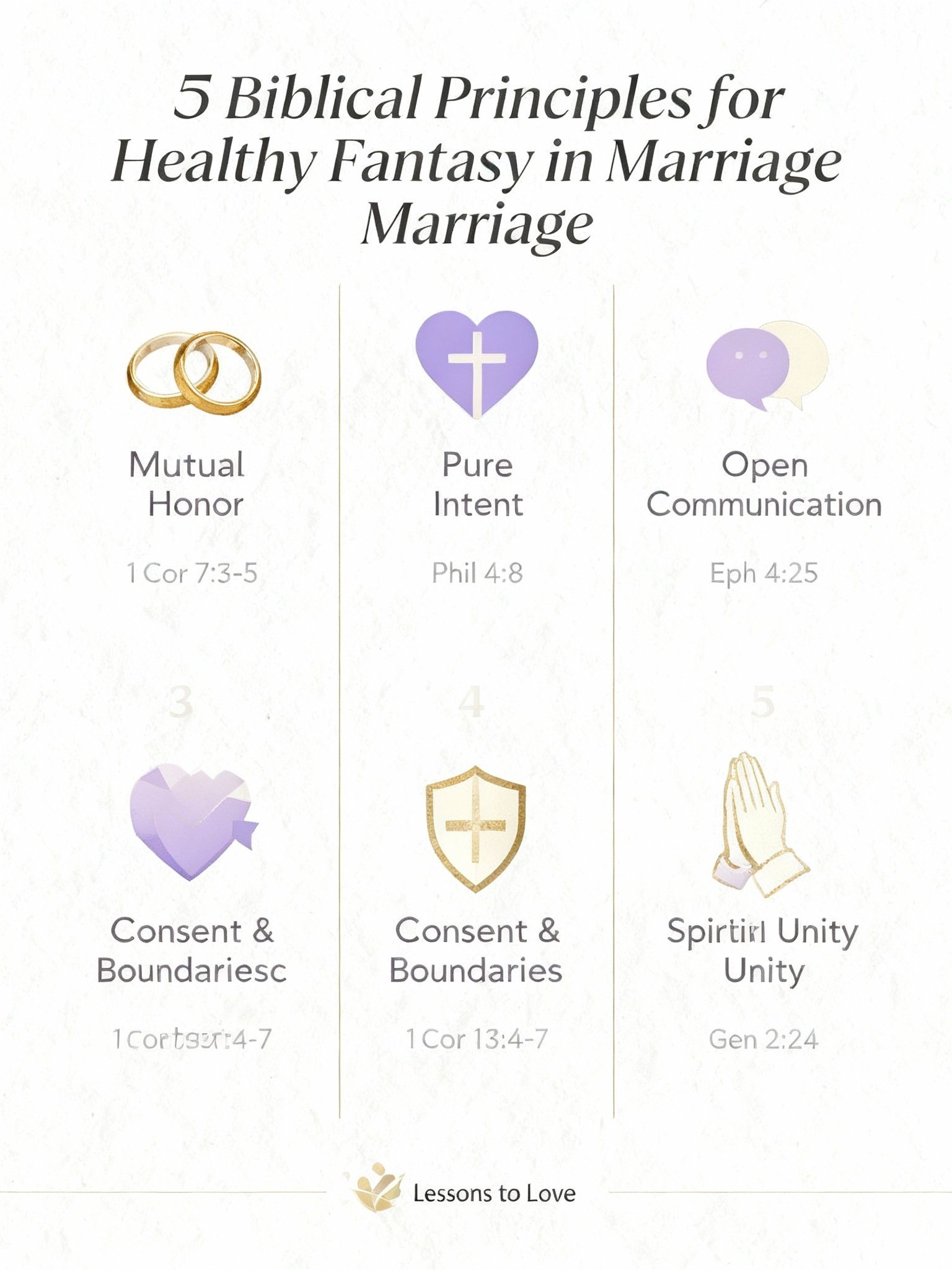
Healthy Fantasy (David’s Model):
- Celebrates your spouse’s body and beauty (as David did in his poetry and as Solomon did in Song of Solomon)
- Imagines scenarios that deepen connection and honor your covenant
- Explores desires that make both partners feel loved, safe, and celebrated
- Says, “I choose you, I delight in you, I’m fully present with you”
Crosses the Line (David’s Failure with Bathsheba):
- Fantasies involving anyone outside your marriage (2 Samuel 11:2-4)
- Scenarios that objectify or degrade your spouse
- Desires that require secrecy, shame, or violate consent
- Anything that says, “I wish you were someone else” or “I’m escaping from you”
The Discernment Question
David should have asked himself (and we should ask): “Does this desire draw me closer to my covenant partner, or does it pull me away?”
If it’s pulling you toward your spouse—celebrate it. If it’s pulling you away—confess it, redirect it, and protect your covenant. This is the wisdom of Philippians 4:8: “Whatever is true, whatever is noble, whatever is right, whatever is pure, whatever is lovely, whatever is admirable—if anything is excellent or praiseworthy—think about such things.”
Within marriage, celebrating your spouse’s beauty and imagining intimacy together is all of these things.
Why Some Couples Avoid Discussing Marriage Fantasies
Even David, the man after God’s own heart, struggled with vulnerability. Psalm 51—written after his failure with Bathsheba—reveals a man wrestling with guilt, shame, and the fear of rejection. “Create in me a pure heart, O God, and renew a steadfast spirit within me” (Psalm 51:10).
Many Christian couples avoid discussing fantasies for similar reasons:
1. Fear of Judgment
“What if my spouse thinks I’m perverted or sinful?” This fear is rooted in shame—the belief that our desires make us unworthy. But remember: God created desire. It’s not the desire that’s the problem; it’s what we do with it.
2. Religious Conditioning
Many of us grew up hearing that sex is shameful, that our bodies are sources of temptation, and that “good Christians” don’t think about such things. But that’s not what the Bible teaches. Genesis 2:25 says Adam and Eve were “naked and felt no shame.” Shame entered after the fall—but within covenant marriage, we can reclaim that freedom.
3. Past Hurt or Trauma
For some, discussing fantasies feels unsafe because of past experiences. If this is you, please know: healing is possible. God is the God of restoration (Joel 2:25). Consider seeking help from a Christian counselor who can guide you through this journey.
4. The Cost of Avoidance
When couples avoid these conversations, intimacy suffers. Resentment builds. Connection fades. But when you break the silence with grace—as David did in his psalms—you open the door to deeper intimacy than you ever imagined.
For wives seeking to understand their role in marital intimacy, our guide on how to be a good wife offers biblical wisdom and practical steps.
When to Introduce Fantasies for Deeper Connection
David didn’t write his most passionate psalms overnight. They came after years of walking with God, experiencing His faithfulness, and learning to trust Him with everything. The same is true in marriage.
Signs Your Relationship Is Ready:
- You have a foundation of trust and open communication
- Both partners feel safe expressing vulnerability
- You’re both committed to honoring each other’s boundaries
- You’re in a season of emotional and spiritual connection
How to Start:
Start small. You don’t have to share your deepest desires on day one. Begin with affirmation: “I love the way you…” or “I’ve been thinking about you…” Build from there.
Use “we” language. Instead of saying, “I want you to…” try, “What if we tried…” This frames it as a shared exploration, not a demand.
Celebrate progress, not perfection. David’s psalms show a man who stumbled, repented, and kept moving forward. Your journey will have awkward moments. That’s okay. What matters is that you’re walking it together.
For more guidance on keeping passion alive, explore our article on enhancing sexual pleasure in a Christian marriage.
Navigating Guilt and Shame in a Religious Setting
Psalm 51 is David’s most vulnerable moment. After his sin with Bathsheba, he writes: “Against you, you only, have I sinned and done what is evil in your sight” (Psalm 51:4). But he doesn’t stop there. He asks for restoration: “Restore to me the joy of your salvation” (Psalm 51:12).
Here’s what David understood that many of us miss: Guilt and shame are not the same thing.
Guilt vs. Shame
Guilt says, “I did something wrong.” It’s conviction from the Holy Spirit, and it leads to repentance and restoration.
Shame says, “I am something wrong.” It’s condemnation from the enemy, and it leads to hiding, isolation, and despair.
When it comes to fantasy in marriage, many Christians feel shame—not because they’ve sinned, but because they’ve been taught that desire itself is sinful. But that’s not what the Bible teaches.
The Path to Freedom
1. Distinguish between conviction and condemnation. If your desire is directed toward your spouse and honors your covenant, there’s no sin to confess. The shame you feel is likely religious conditioning, not the voice of God.
2. Embrace grace. Even if you’ve crossed a line (as David did), God’s grace is sufficient. 1 John 1:9 promises: “If we confess our sins, he is faithful and just and will forgive us our sins and purify us from all unrighteousness.”
3. Talk to your spouse. Shame thrives in secrecy. When you bring your desires into the light—in a safe, loving conversation—shame loses its power.
4. Seek wise counsel. If guilt and shame are overwhelming, talk to a trusted pastor or Christian counselor. You don’t have to walk this alone.
Seeking Professional Help When Necessary
David had Nathan the prophet—someone who spoke truth into his life, even when it was hard to hear (2 Samuel 12:1-14). Sometimes, we need that same kind of outside perspective.
If you’re struggling to navigate fantasy, desire, or intimacy in your marriage, there’s no shame in seeking help. In fact, it’s a sign of wisdom and strength.
When to Seek Professional Help:
- When conversations about intimacy consistently lead to conflict or hurt
- When past trauma is affecting your ability to connect
- When guilt and shame feel overwhelming
- When you’re unsure how to align your desires with your faith
Finding the Right Help:
Look for a Christian counselor or sex therapist who understands both the biblical foundation of marriage and the practical realities of intimacy. Your church may have resources, or you can search for faith-based counselors in your area.
Remember: seeking help isn’t a sign of failure. It’s an investment in your marriage and a testament to your commitment to honoring God and each other.
Frequently Asked Questions: Fantasy in Christian Marriage
Is it a sin to fantasize about my spouse?
No. Fantasizing about your spouse is celebrating the covenant God has given you. It’s directing your desire toward the person you’ve vowed your life to, which honors both your marriage and God’s design. Song of Solomon is full of such celebration.
What if my spouse isn’t comfortable with my fantasies?
Honor their boundaries. Healthy fantasy requires mutual consent and comfort. If your spouse isn’t ready, don’t pressure them. Instead, focus on building trust and communication. Over time, as safety increases, they may become more open.
How do I know if a fantasy crosses the line?
Ask yourself: “Does this desire draw me closer to my covenant partner, or does it pull me away?” If it involves anyone outside your marriage, objectifies your spouse, or requires secrecy, it crosses the line. If it celebrates your spouse and deepens connection, it’s healthy.
What does the Bible say about sexual desire in marriage?
The Bible celebrates sexual desire within marriage. Song of Solomon is an entire book dedicated to marital passion. 1 Corinthians 7:3-5 instructs spouses not to deprive each other. Proverbs 5:18-19 encourages husbands to rejoice in their wives and be captivated by their love. God designed desire as a gift for covenant marriage.
How can I overcome guilt about my desires?
Distinguish between conviction (from the Holy Spirit about actual sin) and condemnation (from shame or religious conditioning). If your desires are directed toward your spouse and honor your covenant, there’s no sin. Embrace the grace and freedom God offers within marriage.
What if we have different levels of desire?
This is common and normal. The key is communication, compassion, and compromise. Talk openly about your needs and find ways to honor each other. Sometimes one partner will initiate more; other times, the other will. The goal is mutual care, not scorekeeping. See our guide on keeping a man in love for more on meeting each other’s needs.
Can fantasy help improve our sex life?
Yes, when approached with mutual respect and consent. Fantasy can reignite passion, deepen emotional connection, and help couples explore new dimensions of intimacy. It keeps marriage vibrant and prevents intimacy from becoming routine.
What if past trauma makes fantasy difficult?
Healing is possible, but it takes time, patience, and often professional help. God is the God of restoration. Consider working with a Christian counselor who specializes in trauma and intimacy. Your spouse should honor your pace and create a safe space for healing.
How do we start talking about fantasies without it being awkward?
Start small and build trust. Begin with affirmation: “I love when you…” or “I’ve been thinking about you…” Create a judgment-free environment and use “we” language: “What if we tried…” Remember, awkwardness is normal at first. What matters is that you’re growing together.
Is it okay to use resources or programs to improve intimacy?
Absolutely. Just as David sought wisdom from prophets and counselors, we can seek guidance from trusted resources. Programs like Lick by Lick or The Virtuoso Lover offer biblical, practical guidance for deepening marital intimacy. Investing in your marriage honors God.
Ready to deepen intimacy in your marriage?
Explore our complete guide to intimacy for couples or discover practical lovemaking tips for men.
Final Thoughts: Walking in Freedom
David’s life teaches us that God doesn’t ask us to choose between being godly and being passionate. He asks us to sanctify our passion within covenant.
The desires you feel for your spouse—the fantasies, the longing, the fire—are not evidence of your fallenness. They’re evidence of God’s design. He created you with the capacity for desire so that you could experience the profound intimacy of covenant marriage.
So here’s my prayer for you: May you walk in the freedom David discovered—the freedom to celebrate your spouse without shame, to explore intimacy without guilt, and to honor God with every dimension of your marriage.
You don’t have to choose between being spiritual and being passionate. David didn’t. Solomon didn’t. And neither do you.
Grace and peace,
Robert Martin Lees
Affiliate Disclosure: At Lessons to Love, we believe in transparency. Some of the links in this article are affiliate links, which means if you choose to make a purchase, we may earn a commission at no additional cost to you. We only recommend resources we’ve personally vetted and believe will bring genuine value to your marriage.






I can see that this article and even your entire website is a labor of love for the Christian couple. I have been married for 48 years, and I wish we had something like this to help us in our marriage. Sure we knew intimacy was for pleasure, but there were so many religious ideas that kept us shackled and sometimes frustrated.
What is your background that lead you to a website such as this? I will need to bookmark and come back here often.
Scott, first and foremost, hearing that you and your wife have been married for forty-eight years is a profound honor and a blessing. I pray for that level of endurance in my own life, and it is my deepest hope that my writings can offer you both a sense of purity, renewal, and deep personal enjoyment as you head toward your monumental fifty-year milestone.
You asked what led me to build a site like this, and the truth is that I was pushed to it by the pressure of life itself. We live in a world that constantly demands we perform, dragging our energy and attention in the opposite direction of where the true richness of our lives and marriages actually rests. That relentless noise and applied pressure distracted my wife and me from the original, distinct, and personal attraction that brought us together in the first place.
I created this platform and my companion work at Changing The Cycle because I had to fight my way back to that original spark through the trenches of my own marriage. I wanted to create a space that strips away the clinical, transactional manuals and instead helps couples rediscover the God-given joy of unmasked connection. Sharing this journey is my way of helping other couples own their love stories and experience the freedom of marrying the physical and the spiritual, just as it was designed to be.